How to Organize Perfect Arenas for Students
Safely Positioning Obstacles and Markers: A Practical Guide for Your Riding School
Preparing your arena for safe and fun lessons is not complicated, but it requires a bit of attention. Safely positioning obstacles and markers means thinking about both the horses and the students, creating an environment where everyone can move freely without risks. In this article, you will discover practical tips and creative ideas that will make every lesson smoother and more enjoyable, also using materials such as PVC, which ensures durability and ease of maintenance.
Choosing the Right Material for Obstacles and Markers
Before positioning anything, make sure to use materials that are strong yet lightweight. PVC is perfect because it does not splinter and does not cause injuries. You can set up obstacles, cones, or poles without worrying that they will break after just a few intense lessons. Colored PVC markers attract students’ attention and make the routes to follow clearer. Not only are they safe, but they also last a long time and withstand rain, sun, or winter frost. When choosing the material, think about curious horses that might touch them: no sharp edges or unstable elements.
Positioning lightweight obstacles also allows you to modify them easily during the lesson. You can move a pole a few centimeters if the horse needs more space or change the layout of the course without effort. This way your lessons become more dynamic and engaging, and you can adapt to the different needs of your students, from beginners to more advanced riders.
Creating Safe and Fun Courses
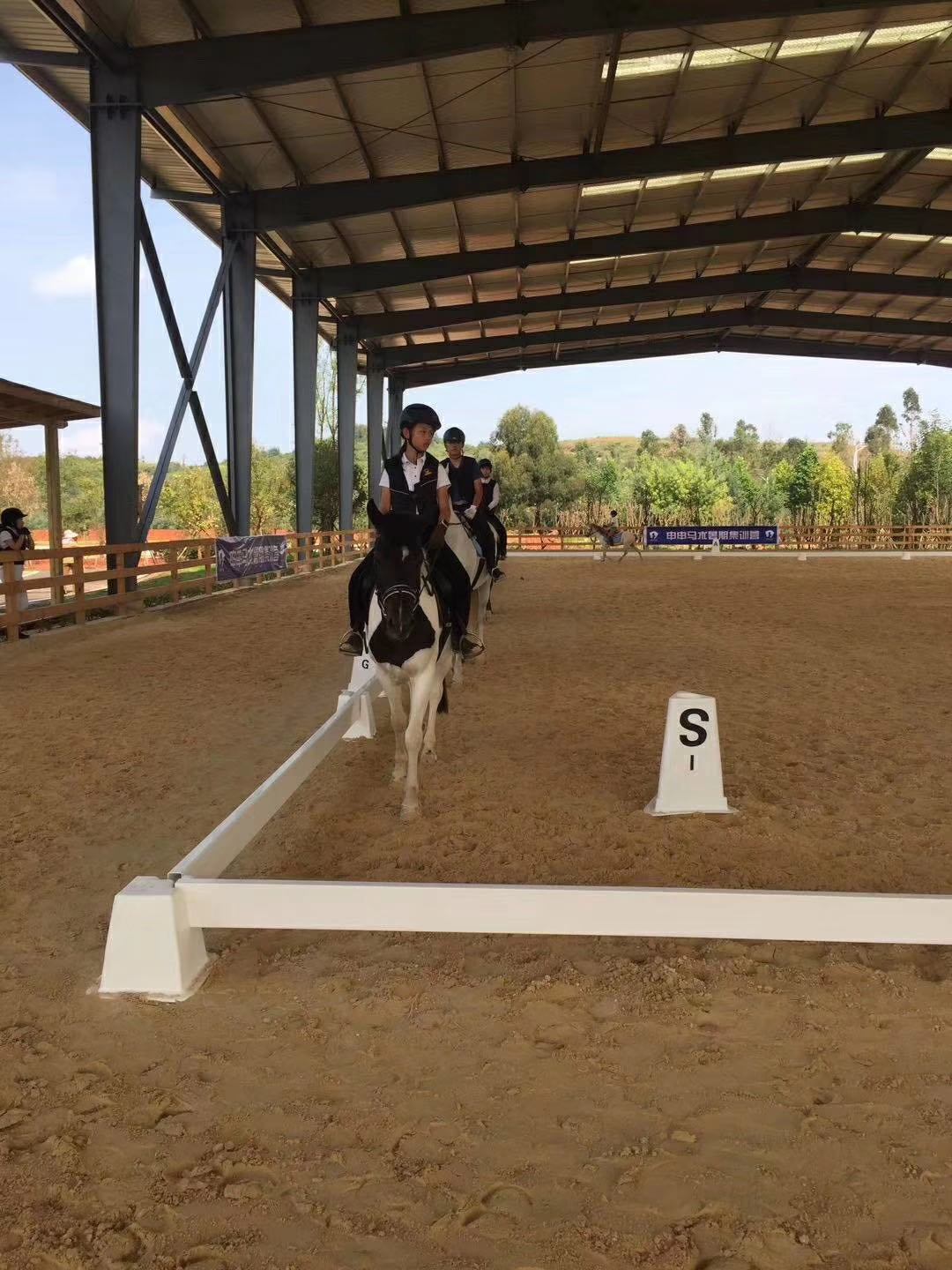
When designing the course, always consider how the horses and students move together. Always maintain enough space between obstacles to avoid collisions or dangerous movements. Never place markers too close, as students could trip or horses could knock over the obstacles. In general, leave at least two meters between poles so movement remains smooth and safe.
You can make the course more fun by adding varied obstacles, such as small bridges, colorful cones, or lines of poles. Variety encourages students to pay attention and develop balance and control. At the same time, don’t overdo it with too many obstacles, or the lesson can become confusing and the horses may get scared. A clear and orderly course is always more effective than one full of random elements.
Involving Students in Safety
Don’t forget that safety also involves the students. Show them how to approach obstacles and read the markers before mounting the horse. You can turn this part into a small game: ask the students to explain the courses or place lightweight cones under your supervision. This not only teaches safety but also helps develop focus and responsibility.
Explaining why certain obstacles need to be spaced apart or why the markers are colored helps children and beginners understand the importance of safety. Additionally, involving students in setting up the courses creates a sense of belonging and collaboration within the school. Everyone feels part of the lesson preparation and learns rules they will always keep in mind.
Extra Tips to Avoid Problems
A simple trick to avoid problems is to place the taller obstacles toward the middle of the arena and the shorter ones near the edges. This reduces the risk of a horse knocking them outward and creates a natural path to follow. Additionally, always check the stability of cones and poles before starting the lesson. Even safe materials like PVC can topple if placed unstably.
Regularly check the courses throughout the season: accidental shifts or weather changes can affect the arena’s safety. A five-minute preventive inspection saves a lot of time and stress during lessons. Remember, safety is never too much, and a small extra effort today prevents problems tomorrow.
Durable Flooring: Why PVC Is Ideal
When setting up your riding school, choosing the flooring is crucial for the safety of both horses and students. A durable and reliable surface not only prevents injuries but also makes lessons more enjoyable and smooth. PVC is becoming increasingly popular in riding schools because it combines durability, lightness, and ease of maintenance. In this article, you will discover why PVC could be the perfect solution for your arena, hassle-free and with a creative touch.
Strength and Durability Without Compromise
PVC is incredibly durable and withstands heavy use without easily bending or breaking. If you teach children or beginners, you know how often obstacles can be accidentally moved or bumped by curious horses. With PVC, you don’t have to worry: it retains its shape, absorbs minor impacts, and has no sharp edges. Additionally, the material resists rain, sun, and cold without deteriorating, making it perfect for seasonal use in riding schools.
Investing in PVC flooring means reducing long-term costs, as you won’t need to constantly replace poles, obstacles, or damaged surfaces. Additionally, you can combine different modular PVC sections to create flexible courses without having to perform heavy maintenance or frequent renovations. The material’s stability allows you to focus on lessons instead of constantly worrying about repairing the flooring.
Safety First
The safety of horses and students is the number one priority in your school. PVC provides a non-slip surface that reduces the risk of falls and slips. Even if the flooring gets wet during a lesson or a summer storm, your students and horses remain more stable compared to other traditional surfaces. Additionally, the lightness of PVC prevents splinters or sharp edges from forming, protecting horses’ hooves and children’s hands.
Using durable flooring means you can place obstacles and markers with confidence. You can change the course layout without worrying about damaging the underlying surface, making each lesson more dynamic and fun. The combination of safety and flexibility allows you to easily adapt to different student levels and types of horses without compromising the flooring’s stability.
Ease of Cleaning and Maintenance
Another advantage of PVC is its incredibly easy maintenance. You can quickly clean it with water and mild detergent, without using harsh chemicals. This is especially useful in riding schools with daily lessons and horses that leave mud or dirt on the flooring. Additionally, PVC does not absorb moisture or odors, so your arena always stays clean and hygienic for both students and animals.
Quick cleaning saves you valuable time and keeps the area ready for back-to-back lessons. You can also easily move modular PVC sections to clean underneath or around obstacles without much effort. The ease of maintenance makes this material ideal even if you run a small school with limited resources, as it doesn’t require special equipment or additional staff.
Versatility and Creativity
PVC is not only durable and safe, but it also offers great versatility. You can use it for entire flooring, obstacles, guideline lines, or colored markers. The material’s modularity allows you to create customized courses for different lessons or special events. For example, you can change the layout for children, beginners, or more experienced horses without major work or extra costs.
Additionally, you can add colors or markings directly on the PVC flooring, making the arena more fun and educational. This helps students follow the courses correctly and better understand the exercises. The combination of durability, safety, and creativity makes PVC a truly complete material for any riding school.
Fun Games and Exercises for Beginners
Teaching horses and beginners can be exciting, but it requires creativity to keep lessons fun and safe. Games and exercises are not just pastimes: they help students develop balance, focus, and confidence. In this article, you will discover simple and engaging activities, perfect for those taking their first steps in the world of dressage, using practical tools such as cones, lightweight obstacles, and PVC flooring.
Coordination and Balance Games
One of the most effective games for beginners is the “Cone Course.” Place colored cones along the arena and ask students to guide the horse between them without touching them. This exercise helps develop precision, improving horse control and concentration. You can make the game more fun by challenging students to complete the course within a set time, without compromising safety.
Another useful exercise is the “Pole Round.” Lay lightweight PVC poles on the ground and teach students to maintain a steady pace while stepping over them. This helps improve balance, posture, and coordination, while the horse learns to move more attentively. Children and beginners enjoy seeing immediate progress, so vary the pole arrangement to keep the course interesting.
You can also combine exercises: a cone course followed by small poles encourages students and horses to think actively. This way, lessons remain dynamic and fun, never becoming monotonous.
Challenges and Mini-Races
Mini-races are a great way to boost beginners’ motivation. You can create simple challenges like “Who completes the course without mistakes?” or “Who follows the cleanest path?” Use lightweight PVC obstacles, colorful cones, or low poles so no one is at risk of injury. Students learn while playing and develop healthy competition that encourages consistent practice.
Another idea is the “Color Game”: assign a color to each obstacle or marker and ask students to follow only the correct ones. This exercise stimulates attention and visual memory, while the horse learns to respond calmly and precisely. You can reward those who complete the course without mistakes with a small symbolic prize, creating excitement and engagement.
Relay races with small groups are just as fun. Each student completes a section of the course and passes the baton to the next teammate. This type of exercise develops collaboration, mutual trust, and riding skills, turning every lesson into an exciting experience.
Creative and Sensory Activities
Including creative elements in lessons helps beginners develop confidence and interest. You can introduce “themed” obstacles with different colors or shapes, simulating fun scenarios like small bridges or imaginary curves. This way, students learn to observe carefully and guide the horse with precision.
Another creative exercise is the “Object Course”: place small, safe objects along the arena and ask students to guide the horse without knocking them over. This improves control, focus, and the horse’s calmness, creating an interactive and fun experience. Additionally, you can vary the objects each lesson, keeping children and beginners curious and engaged.
Don’t forget rhythm and gait games: you can use colored PVC poles as “beats” to have students and horses follow a precise sequence of steps. This exercise develops coordination, sense of rhythm, and communication between horse and rider, making the lesson both educational and playful.
Tips to Maximize Fun and Safety
When creating games and exercises, always remember to keep safety as a priority. Use lightweight, stable, and non-sharp materials, such as PVC, rubber cones, and low poles. Check the flooring before each lesson to prevent slips or unstable obstacles.
Keep lessons short and varied: beginners have limited attention spans and appreciate frequent changes. Alternate coordination exercises, mini-races, and creative activities to maintain enthusiasm and engagement. Involve students by explaining the purpose of each game: understanding the exercise’s goal increases focus and motivation.
Finally, celebrate every small success. Even completing a simple course without mistakes deserves applause and encouragement. This helps students develop confidence, a passion for riding, and respect for the horses, creating memorable experiences.
Rotations and Turns: Managing Large Classes Without Chaos
Managing a large class in your riding school may seem like a tough challenge, but with a bit of organization, it becomes fun. Rotations and turns help keep every student engaged, safe, and focused, without creating confusion in the arena. In this article, you will discover practical, simple, and carefree strategies for handling large groups, using tools such as cones, PVC obstacles, and modular courses that make lessons smooth and dynamic.
Plan Rotations Before the Lesson
The key to avoiding chaos is to plan rotations before the lesson. Divide the group into small subgroups and assign different activities to each. For example, while one group works on the cone course, another can focus on balance exercises or creative games. This way, everyone has a clear role, and no one is left idle or bored.
You can also prepare a small board with colors or numbers to indicate which subgroup should perform each activity. This makes rotations intuitive and reduces time spent constantly explaining what to do. Beginners, in particular, appreciate having visual cues that help them move without hesitation. With simple planning, every lesson becomes organized and relaxed.
Use Dynamic Turns to Maximize Engagement
Turns are a great way to ensure every student receives attention without creating confusion. Assign limited times for each activity, such as five or ten minutes, and switch groups before attention wanes. This keeps energy high and helps students learn more in each session.
You can also alternate seated and mounted activities to give both horses and students a break. For example, one group works on the course while mounted, while another sets up lightweight PVC obstacles or follows theory instructions. This way, the lesson flows without interruptions, and students always feel they are doing something useful and fun. Dynamic rotations also help develop autonomy and collaboration among students.
Create Modular Courses to Facilitate Flow
Modular courses are perfect for managing turns and rotations in large classes. You can create separate sections of the arena using cones, PVC obstacles, or lightweight poles, so multiple groups can practice simultaneously. Each group follows a different course and moves in an orderly manner when it’s their turn. This reduces the risk of collisions and maintains a steady flow throughout the lesson.
You can also vary the courses weekly to stimulate students’ attention and motivation. For example, a cone course today, a mini-jump course in PVC tomorrow. Modularity makes it easy to adapt the arena to multiple experience levels, from beginners to advanced riders. This way, even in large classes, every student feels they are progressing and actively participating without chaos.
Practical Tips for Effective Turns
To make rotations truly effective, use clear visual signals and set times. You can use colored cones, numbers, or small cards to indicate groups and sequences. Additionally, always explain in advance how the turns will work and what to do when time is up. Students appreciate clarity and move more confidently in the arena.
Another trick is to involve students in managing the turns. Ask them to help place cones or poles, or to keep track of their classmates’ time. This increases responsibility, focus, and collaboration, turning a large lesson into an interactive and carefree activity.
Finally, always remember to watch the horses. Even with well-organized turns, it’s important to give adequate breaks to prevent stress or fatigue. Students will quickly learn that the proper pace of rotations not only enhances their learning but also makes the experience more fun and safe for everyone.
Managing large classes without chaos is not impossible. With careful planning, dynamic turns, and modular courses, you can ensure organized, safe, and fun lessons. Involving students in management increases autonomy and collaboration, while horses benefit from regular breaks. By following these tips, every lesson becomes smooth and carefree, and you can enjoy teaching without stress, knowing that everyone participates actively and learns safely.
Share This Story, Choose Your Platform!




Leave A Comment